
BRINGING YOUR SPOUSE HOME IS NOT A FAVOUR — IT IS YOUR LEGAL RIGHT AS A CANADIAN CITIZEN OR PERMANENT RESIDENT. LET US MAKE SURE THE FILE IS BUILT TO PROVE IT.
What We Handle
- Inland spousal sponsorship applications
- Outland spousal sponsorship applications
- Spousal Open Work Permit (SOWP) concurrent applications
- Common-law partner sponsorship
- Conjugal partner sponsorship
- Relationship evidence package preparation
- IRCC procedural fairness responses
Common Refusal Reasons:
- Genuine relationship not sufficiently evidenced
- Missing or expired police certificates
- Medical exam not completed with designated physician
- Sponsor income below minimum necessary income threshold
- Inconsistent relationship timeline across documents
- Prior sponsorship undertaking default
WHAT IS SPOUSAL SPONSORSHIP IN CANADA?
Spousal sponsorship allows a Canadian citizen or permanent resident aged 18 or older to sponsor their spouse, common-law partner, or conjugal partner for Canadian permanent residence. The relationship must be legally recognized, genuine, and not entered into primarily to obtain immigration status.
- Spouse: Legally married under the laws of the country where the marriage took place and recognized under Canadian law
- Common-Law Partner: Has cohabited with you in a conjugal relationship for at least 12 continuous months
- Conjugal Partner: Has been in a committed relationship with you for at least one year, with significant barriers preventing cohabitation or marriage
Once your sponsored spouse lands as a permanent resident, you are bound by a 3-year financial undertaking — a legal commitment to financially support them for 3 years from the date of landing. This undertaking applies regardless of changes in your relationship or personal circumstances after the sponsorship is approved.
INLAND VS. OUTLAND — THE DECISION THAT SHAPES YOUR NEXT TWO YEARS
The inland vs. outland choice is not simply administrative — it determines your partner's work rights, travel freedom, and appeal options for the duration of processing. Understanding the full implications of each stream before you apply is essential.
- Inland Sponsorship: Your partner is currently in Canada with valid temporary status. They can apply for a Spousal Open Work Permit (SOWP) simultaneously, allowing them to work for any Canadian employer while waiting for the PR decision. Processing typically takes approximately 12 months. The key limitation: your partner must remain in Canada throughout processing — departure may be considered an abandonment of the application. There is no right of appeal to the Immigration Appeal Division if the application is refused.
- Outland Sponsorship: Your partner is abroad, or frequently travels and cannot commit to staying in Canada. The application is processed through the relevant visa office abroad. Processing typically takes approximately 12 months depending on the office. Your partner can travel freely. If the application is refused, both the sponsor and the sponsored person have the right to appeal to the Immigration Appeal Division (IAD) within 30 days of the refusal.
Which stream is right for you depends on your partner's current immigration status, work needs, travel obligations, and your risk tolerance regarding appeal rights. VisaScope assesses your full circumstances before recommending a stream.
THE SPOUSAL OPEN WORK PERMIT (SOWP)
For inland applicants, the Spousal Open Work Permit is one of the most practical tools in the Canadian immigration system. Filed concurrently with the inland PR application using IMM 5002, the SOWP allows the sponsored spouse to work for any Canadian employer — in any occupation — while the permanent residence application is being processed. There is no employer-specific restriction.
The SOWP remains valid until a final decision is made on the PR application. Because IRCC processes work permits on a separate track from the PR application, SOWP approval often comes within a few months — significantly before the PR decision. If the PR application is approved, the SOWP is no longer needed. If additional time is required, the SOWP can be renewed.
VisaScope files the SOWP concurrently with the inland application to minimize any gap in your partner's work authorization in Canada.
GOVERNMENT FEES AND PROCESSING TIMES (2026)
The following government fees apply to spousal sponsorship applications in 2026. These fees are paid directly to IRCC and are non-refundable regardless of the outcome:
- Sponsorship application fee: $85 CAD
- Principal applicant processing fee: $545 CAD
- Right of Permanent Residence Fee (RPRF): $575 CAD
- Biometrics: $85 CAD per person
- Medical exam: approximately $200–$400 CAD (varies by physician and location)
Total government fees (minimum): approximately $1,205 CAD (excluding biometrics and medical exam). Processing times as of 2026: both inland and outland applications typically take approximately 12 months. Always verify current processing times using the IRCC processing time tool at ircc.canada.ca, as times fluctuate.
THE DOCUMENT PACKAGE — WHAT EVERY SPOUSAL APPLICATION NEEDS
A complete spousal sponsorship application requires the following documents. Missing or expired items will result in IRCC returning your application or refusing it without the option to supplement:
- Completed IMM forms: IMM 1344, IMM 5481, IMM 0008, IMM 5406, IMM 5540
- Valid passports — all pages — for both sponsor and sponsored person
- Marriage certificate with certified translation if not in English or French
- Proof of sponsor's Canadian citizenship or permanent residence status
- Police certificates from all countries of residence for the past 10 years (both parties)
- Medical exam results from an IRCC-designated panel physician
- Relationship evidence package:
- Photos together with dates and locations
- Communication records — texts, emails, calls
- Joint financial documents
- Travel history as a couple
- Statutory declarations from people who know the couple
- Proof that the sponsor meets the minimum necessary income threshold
WHY SPOUSAL SPONSORSHIPS GET REFUSED — AND HOW VisaScope PREVENTS IT
The three most common failure points in spousal sponsorship applications are entirely preventable:
1. Thin relationship evidence. A photobook and chat screenshots is not a relationship package. A real package has a narrative, a timeline, corroborating witnesses, and a logical explanation for any gaps in the relationship history. IRCC officers are experienced at identifying packages assembled hastily the week before submission. VisaScope builds the evidence package methodically — starting with a structured relationship timeline, then sourcing corroborating documents to support every key date and claim.
2. Missing documentation. IRCC gives no second chances. Police certificates from the wrong country, expired medical exams, or untranslated documents are not fixable after submission. Each item is verified against IRCC requirements before the application is assembled.
3. Inconsistency. Dates and facts must match perfectly across every form, every document, and every narrative. A discrepancy between the relationship start date on IMM 5540 and the statutory declaration of a witness is the kind of detail that triggers a procedural fairness letter or refusal. VisaScope cross-references every document before submission.
FREQUENTLY ASKED QUESTIONS
How long does spousal sponsorship take in Canada in 2026?
Current processing times are approximately 12 months for both inland and outland applications. IRCC targets 12 months for 80% of complete applications. Complex cases, additional document requests, or inadmissibility issues extend timelines. VisaScope monitors your file throughout and responds to every IRCC request promptly so your application never stalls from inaction.
Can my spouse work in Canada while the sponsorship is being processed?
Yes — if you apply inland, your spouse can simultaneously apply for a Spousal Open Work Permit (SOWP), which allows them to work for any Canadian employer while waiting for the PR decision. The SOWP is typically processed faster than the PR application itself. Outland applicants cannot work in Canada without a separate work permit — VisaScope advises on temporary work permit options for outland clients who need to work during processing.
What is the difference between sponsoring a spouse versus a common-law partner?
A spouse is someone you are legally married to. A common-law partner has cohabited with you in a conjugal relationship for at least 12 continuous months. The sponsorship process is the same for both — but the evidence package differs significantly. Common-law relationships require substantial proof of cohabitation (joint lease, utility bills, bank statements, statutory declarations) because there is no marriage certificate as an anchor document.
How much does spousal sponsorship cost in Canada?
Government fees total approximately $1,205 CAD: $85 sponsorship fee, $545 principal applicant processing fee, $575 Right of Permanent Residence Fee, plus $85 for biometrics and $200–400 for the medical exam. These fees are paid directly to IRCC and are non-refundable if the application is refused. VisaScope's professional fees are separate — see our service fees page for full pricing.
My spousal sponsorship was refused. What are my options?
For outland refusals, you have the right to appeal to the Immigration Appeal Division (IAD) within 30 days of receiving the refusal decision. For inland refusals, the IAD appeal right is not available — but judicial review at the Federal Court is an option. In most cases, a substantially strengthened reapplication addressing every stated refusal reason produces better results and faster reunification than litigation. VisaScope reviews every refusal letter and gives you an honest assessment of the best path forward.
Can I sponsor my spouse if I am a permanent resident (not a citizen)?
Yes. Both Canadian citizens and permanent residents aged 18 and over can sponsor a spouse. However, permanent residents sponsoring from outside Canada must demonstrate they intend to live in Canada when their sponsored spouse lands. Citizens face no such restriction and can apply from abroad.
Does my spouse need a medical exam for sponsorship?
Yes. All sponsored spouses and dependants must complete an IRCC-approved immigration medical examination (IME) with a IRCC-designated panel physician. The exam is valid for 12 months from the date of completion. VisaScope provides a list of panel physicians near your spouse's location and advises on timing so the medical does not expire before the application is decided.
Can I be refused as a sponsor?
Yes. Sponsors can be found ineligible if they: received social assistance (other than for disability), defaulted on a prior sponsorship undertaking, were convicted of certain offences, or do not meet the minimum necessary income threshold. VisaScope reviews sponsor eligibility before any application is filed — identifying and addressing potential issues before they become refusal grounds.
SPOUSAL SPONSORSHIP TORONTO — SERVING THE GREATER TORONTO AREA
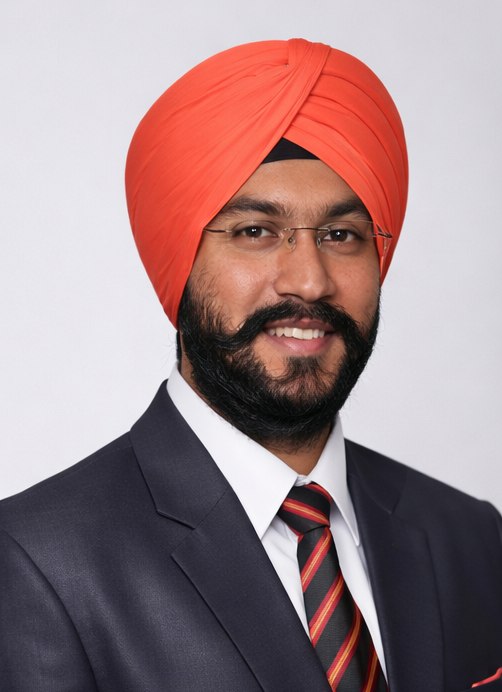
VisaScope is a licensed RCIC firm based in Toronto at 51 E Liberty St, Suite 2106. Jagpreet Singh, our RCIC, handles inland and outland spousal sponsorship applications for clients living across the Greater Toronto Area and internationally. Whether you are sponsoring your spouse from India, Pakistan, the Philippines, Nigeria, Jamaica, or anywhere else in the world, we manage the full file — eligibility review, application preparation, document coordination, IRCC correspondence, and Spousal Open Work Permit — from our Toronto office.
We regularly serve sponsors and their families in:
- Toronto — all neighbourhoods including Scarborough, North York, Etobicoke, East York, and downtown
- Mississauga and Brampton — Peel Region's largest population of sponsoring families
- Markham, Vaughan, and Richmond Hill — York Region with strong South Asian and East Asian communities
- Oakville and Burlington — Halton Region
- Ajax, Pickering, and Whitby — Durham Region east of Toronto
- Hamilton and surrounding area
Consultations are available by video or phone for sponsors and sponsored partners located anywhere in Canada or internationally. VisaScope handles cases where the sponsor lives in Toronto and the partner is still abroad, as well as inland cases where the partner is already present in Canada and you want to apply for PR and a Spousal Open Work Permit simultaneously.
GET STARTED
PROFESSIONAL ASSOCIATIONS & COMMUNITY PARTNERS: